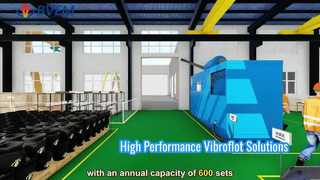
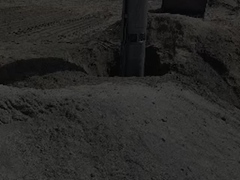
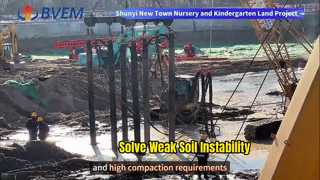
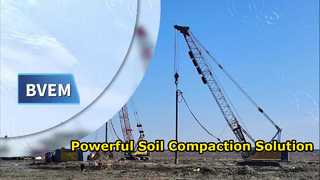
Brief: In this video, we explore the Vibroflotation Method for strengthening soil shear capacity in pile foundation engineering. You'll see how Top Feed Electric Vibroflotation Equipment is applied in real-world projects, such as the anti-liquefaction foundation treatment for the Bangladesh tunnel. We demonstrate the process of creating stone column piles, with depths of 21-24.5m and diameters of 1000mm, and explain how this technique enhances ground stability for large-scale infrastructure.
Related Product Features:
Electric vibroflots with motor power ranging from 30 kW to 260 kW for versatile application.
Models like BJV75E-426 and BJV180E-426 offer high vibration power up to 276 kN.
Designed for creating stone column piles with diameters up to 1000mm and depths over 24.5m.
Applied in anti-liquefaction foundation treatments for projects like tunnels and bridges.
Provides comprehensive service including geological analysis and construction scheme design.
Equipment features high rotation speeds up to 1450 rpm and amplitudes up to 18.9 mm.
Backed by 30 years of industry experience and used in major projects globally.
Supports whole process from equipment selection to on-site installation and commissioning.
FAQs:
What is the Vibroflotation Method used for in foundation engineering?
The Vibroflotation Method is used to strengthen soil shear capacity, particularly for anti-liquefaction treatment in foundation projects, by creating dense stone columns that improve ground stability.
What are the key specifications of the Top Feed Electric Vibroflotation Equipment?
Key specifications include motor power from 75 kW to 180 kW, vibration power up to 276 kN, max rotation speed of 1450 rpm, and the ability to create stone column piles with diameters of 1000mm and depths up to 24.5m.
How does BVEM support clients in implementing the Vibroflotation Technique?
BVEM provides whole process services, including geological analysis, vibroflotation design, equipment selection, construction scheme formulation, on-site installation, commissioning, and operator training to ensure successful project execution.